Technical catalog
TU37B Cold-Drawn Seamless Bendable Tube: Specs and Uses
This reference sheet covers the TU37B cold-drawn seamless bendable tube, a carbon steel grade supplied as a bendable tube. It presents the tube, its size and composition characteristics, competition uses, forming and post-bend inspection, and precautions for storage and welding.
TU37B Cold-Drawn Seamless Tube
TU37B is an unalloyed carbon steel. Cold-drawn and seamless, it offers consistent diameter and wall thickness suited to competition tubular structures, with no longitudinal seam that could weaken.
The sizes offered and their tolerances are given by the supplier. This catalog does not give a dimension without a verified source; ask for the delivery data sheet and the batch certificate.
- Check the diameter and wall thickness you need.
- Check the delivery condition: cold-drawn or not.
- Ask for the material certificate of the batch.
Size and Composition Characteristics
The composition of TU37B is that of a plain carbon steel. Its mechanical characteristics depend on the batch and the treatment, and they are read on the certificate supplied with the delivery.
For sizing, section and wall thickness govern stiffness and weight. A thicker tube is not always the better solution: it adds weight and complicates welding.
Competition Uses
TU37B is used for roll cages, body reinforcements, seat mounts and anchor points, where the event regulations accept this grade. It is often chosen for easier handling than low-alloy steels.
The choice always depends on the regulations and the design of the whole assembly. A compliant tube alone does not guarantee a compliant cage.
Forming and Inspection After Bending
Bending uses a former matched to the diameter and a bender whose radius does not reduce the section too much. A radius that is too tight crushes the tube and loses the intended section.
After bending, check the section at the tightest points and check for cracks on the outer face of the bend. Test-bend a short offcut from the same batch before forming a final part.
- Use a former matched to the diameter.
- Respect a compatible bend radius.
- Check the section and for cracks after bending.
Storage and Precautions Before Welding
Store tubes indoors, closed at the ends and away from moisture and the ground. Surface rust reduces wall thickness locally and makes welding harder.
Before welding, clean and deburr the ends, then mark each tube with its batch number so that it can be traced if an inspection asks for it.
Welding and Joint Integrity
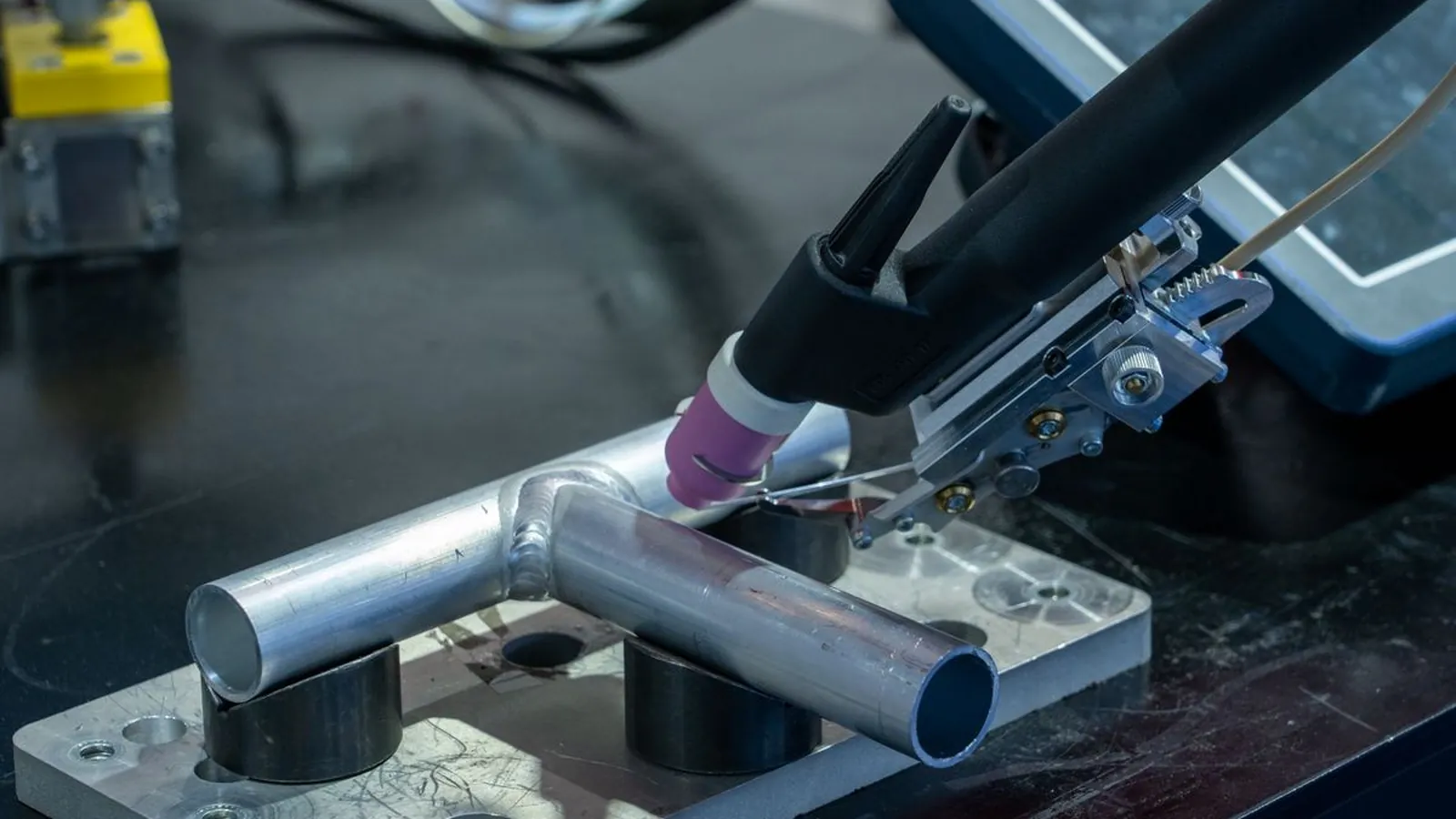
TU37B is welded with a suitable process under gas shielding, on prepared and clean edges. A badly prepared joint gives a porous weld or lack of penetration, which is hard to see by eye.
After welding, a visual check of every bead is the minimum. On the most loaded joints, a more thorough check is useful.
Mark each weld with the welder's initials and the date in the fabrication log. If a joint is later found to be cracked, the mark identifies who made it and which batch of tube was used, which speeds up the repair and the inspection.
Allow the joint to cool slowly and avoid quenching it in water or air blast unless the procedure says so. Rapid cooling hardens the heat-affected zone and makes the weld brittle under repeated load.
Frequently asked questions
Is cold-drawn TU37B more precise than hot-rolled tube?
Yes, cold drawing generally gives a more consistent diameter and wall thickness. The real values are read on the batch certificate.
Can this tube be bent without a former?
No. Without a former the tube flattens or cracks. Use a former matched to the diameter.
Does the tube need stress relieving after welding?
That depends on the wall thickness and the process. Follow the supplier and the welding procedure.