Technical catalog
Open Wheel Nut 14x1.5: Application and Torque
The open wheel nut 14x1.5 is a tapered wheel fixing used on competition rims that call for it. This article presents its characteristics, thread types and pitches, the materials used, its applications on racing wheels, fitting and torque, and then maintenance and inspection.
Characteristics of Open Wheel Nuts 14x1.5
An open nut is recognised by its shape: the wheel stud passes through it and it does not screw fully onto a closed end. This geometry lets you check visually how much thread is engaged, which makes inspection before each session quicker.
The 14x1.5 designation gives the thread diameter and the pitch, which must match the stud and the rim exactly. This catalog does not give detailed dimensions for a specific manufacturer without a verified source; read the stamped reference and ask for the data sheet.
- Note the diameter and pitch of the stud thread.
- Check that the rim takes an open-type seat.
- Ask for the data sheet with key size and torque.
Thread Types and Pitch
Fine-pitch and standard-pitch threads are not interchangeable. A nut made for one pitch will not fit a stud of another pitch, even when the diameter looks identical. Forcing the fit damages both parts and makes the clamping impossible to control.
Before buying, identify the pitch of every stud on the car. Replacement studs must belong to the same series as the originals or to the series the competition rim requires.
Materials: Steel, Alloy, Stainless
Treated steel is the most common material for competition nuts, with a good balance of strength and cost. Alloy is lighter but calls for more frequent checks of the thread condition. Stainless steel resists corrosion well, but it does not replace the mechanical strength needed for the torque.
The material does not remove the need to respect the manufacturer's torque. A stronger nut that is badly tightened loosens as easily as an ordinary one.
Applications for Racing Wheels
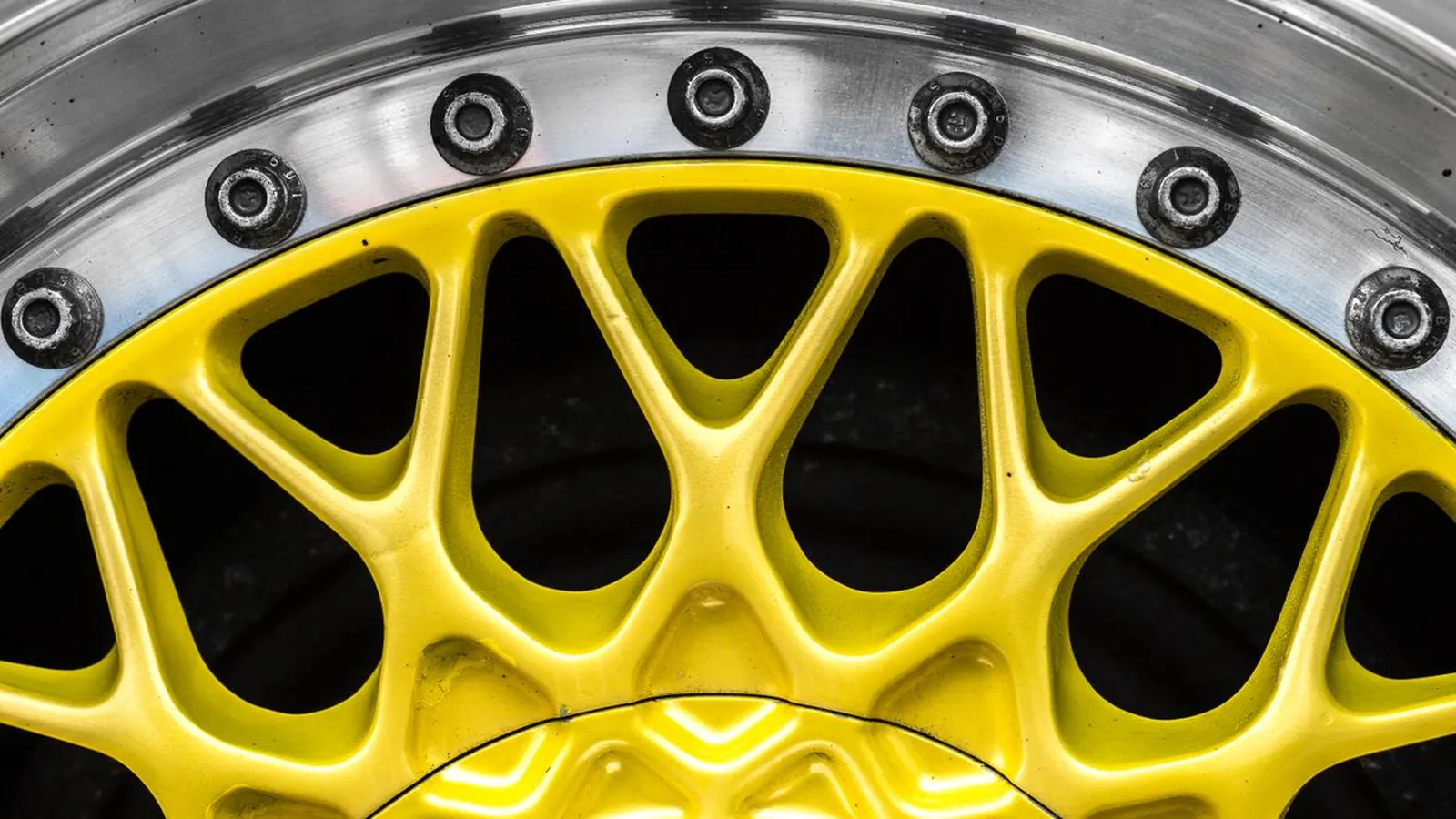
Open nuts are used on rims whose seat is designed for them, usually on rally or circuit cars. Their use depends on the rim and the hub, not on personal preference: a rim designed for another seat type must never take an open nut by default.
On a car in competition, wheel fixing is part of the checks made before every session. Record the type and number of nuts in the car log.
Installation and Torque Specifications
Tighten in a star pattern, wheel lifted or on flat ground, in several passes, and finish with a torque wrench set to the manufacturer's value for the rim or hub. Hand tightening or an unadjusted impact driver is a common cause of loosening.
After the first kilometres, check every nut again, because the seat settles under load. A nut that turns without resistance must be replaced together with its seat if necessary.
- Tighten in a star pattern, in at least two passes.
- Use a torque wrench set to the manufacturer's value.
- Check the nuts again after the first kilometres.
Maintenance and Inspection
Clean the thread and the seat before each fitting, without oil that would change the real torque. Check for cracks, a crushed thread and a deformed seat. A damaged nut is replaced, never repaired.
Record the date and torque of each tightening in the car log, so that you always know when each nut was last checked.
Frequently asked questions
What is the difference between open and closed wheel nuts?
An open nut shows how much stud is engaged, a closed nut does not. Use the type the rim is designed for, never the other one by default.
What torque should I apply?
The torque is given by the manufacturer of the rim or hub. This catalog does not give a general value; use a torque wrench and the data sheet of your wheel.
Can open wheel nuts be reused?
A nut in good condition can be reused after a trouble-free outing. A deformed, cracked or impacted nut must be replaced.