Technical catalog
Clio 2 Super 1600 Front Bumper: Installation and Features
The polyester front bumper for the Clio 2 Super 1600 replaces the original part on a competition car. This article explains why it is replaced, the materials used, the comparison with the original bumper, installation, maintenance and repair, and the legal and safety considerations.
Why Replace the Front Bumper on a Clio 2 Super 1600?
The original bumper is heavy and designed to absorb low-speed impacts and to meet road rules. On a race car it is often replaced by a lighter part, which lightens the front end and can house a radiator or an air intake suited to the preparation.
Replacement is not an automatic gain. A lighter part must still hold its fixings, protect the radiator and comply with the bodywork rules of the event.
- Decide the purpose: weight, air flow or appearance.
- Check the fixing points against the original shell.
- Confirm the bodywork rules of the event.
Materials: Polyester, Fiberglass, Plastic
A bumper in fibreglass-reinforced polyester is moulded, light and easy to repair. Technical plastic parts are more flexible under deformation but harder to repair. Each material reacts differently to impact and heat.
This catalog does not give strength figures for a specific part without a verified source. Ask the manufacturer for the material data sheet before buying.
Comparison with the Original Bumper
The original bumper is designed for pedestrian protection and low-speed urban knocks, which makes it heavier. The competition part is lighter, but it absorbs less energy in low-speed impacts and is repaired differently.
The choice depends on the discipline, the regulations and the use. On circuit, mass matters; on rally, resistance to stones and impacts matters more.
Installation Guide for a Polyester Front Bumper
Trial-fit the part before painting: the gaps to the wings, bonnet and lamps must be even. Fix it on the intended points with brackets that do not force the part into shape.
Check the clearance with the wheels at full lock and the suspension at travel, then recheck the fixings after the first outings.
- Trial-fit before painting.
- Fix on the intended points without forcing the part.
- Check clearance with the wheels at full lock.
Maintenance and Repair
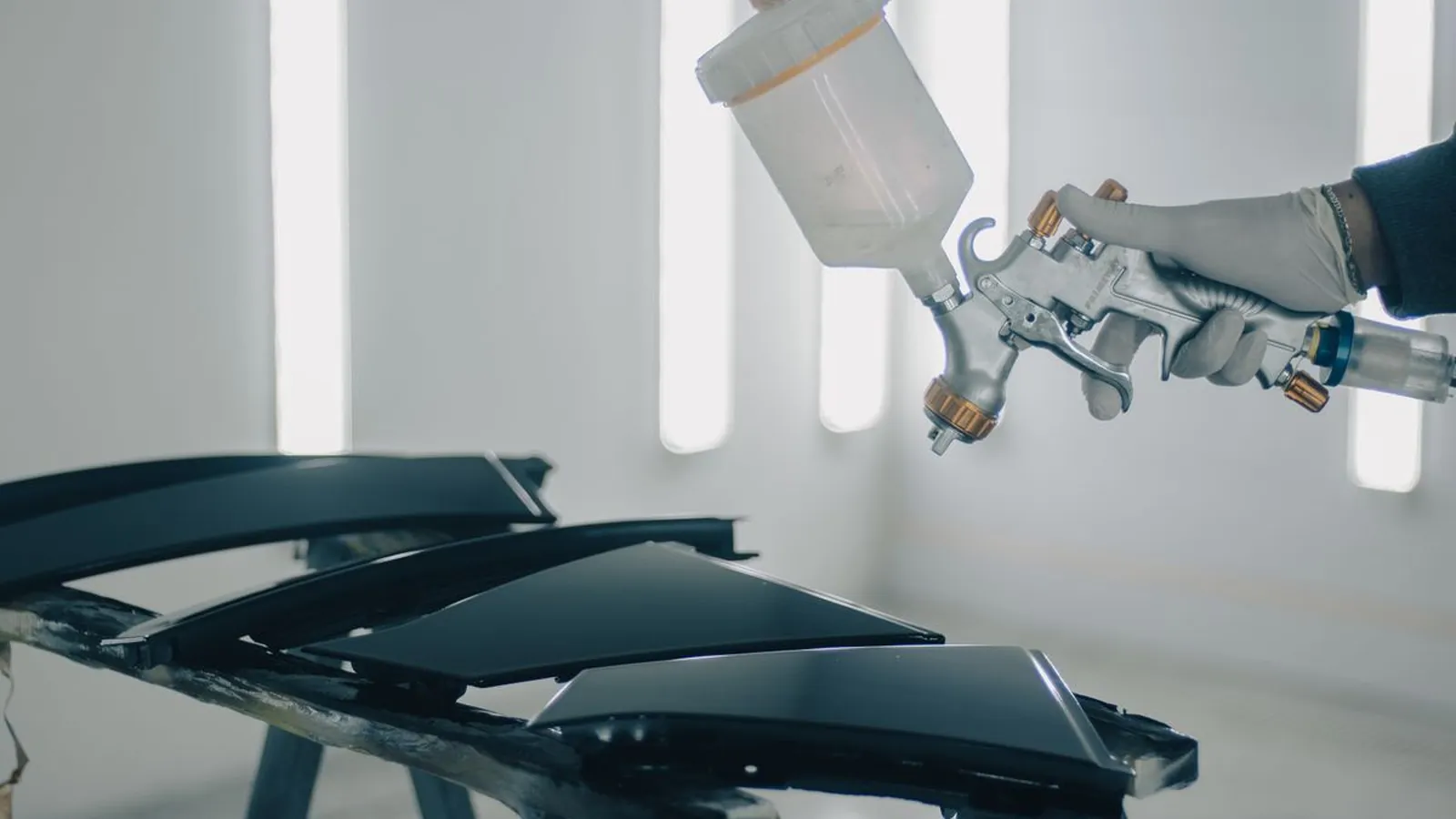
A crack that reaches a fixing point must be repaired quickly, because it spreads under vibration. Repair with a compatible resin, a fibre reinforcement if needed, then sand and paint.
Check the fixing tabs and the contact with the wings at every session. Repeated rubbing wears the paint and then the polyester.
Legal and Safety Considerations
A modified bodywork part can be checked against pedestrian safety rules and the regulations of the event. For road use, the law of the country applies, and a competition part is not automatically allowed.
Have the fitting checked by the organiser or a technical inspection before final use, and keep the part documentation with the car file.
Keep a photo record of the fitted bumper, taken from the same points before and after each change. The photos help a scrutineer see at a glance what was fitted, and they show any shift in the gaps over a season.
Before a long event, walk around the car with the bumper in mind: check the lamps are secure, the bonnet closes evenly against the bumper and nothing is rubbing on the wing edge. Five minutes of this check finds most fitting faults before they cost a session.
Frequently asked questions
Is a polyester bumper road legal?
That depends on the part, the country and the law. This catalog does not give an approval; check with the authorities before road use.
How do I repair a crack in a polyester bumper?
Prepare the area, repair with a compatible resin and a reinforcement if needed, then sand and paint. A crack near a fixing point should be treated without delay.
What is the difference between polyester and technical plastic?
Fibre-reinforced polyester moulds and repairs easily; technical plastic is more flexible but harder to repair. The choice depends on the part and the use.